
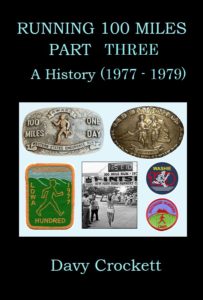
 New Book! by Davy Crockett. Running 100 Miles: Part Three – A History (1977-1979) 233 pages, 300+ photos, hardback, paperback, or Kindle. Available on Amazon (click here)
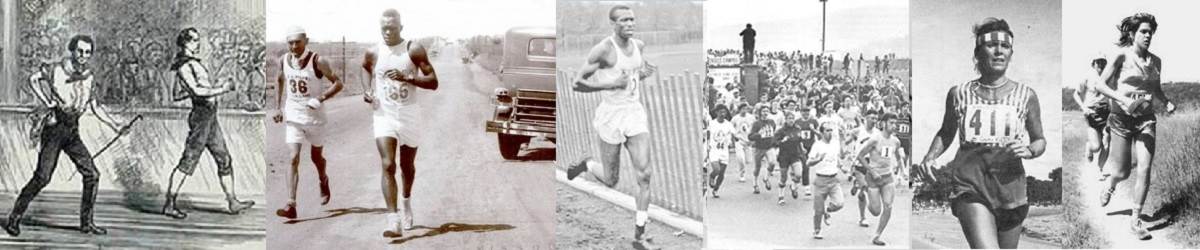
The first two volumes of this 100-mile history covered nearly 250 years, during which more than 1,000 people walked or ran 100 miles within 24 hours. Thousands of others tried, and many reached that milestone in less than 30 hours.
Volume three covers only three years. Why? Starting in 1977, the 100-mile and 24-hour races received much more publicity and participation. Enthusiasm for the 100-mile distance exploded and the ultrarunning sport entered a new phase of its history. Many 100-mile races were being opened for anyone to try, and there were no lotteries yet. In 1977, there were at least eight 100-mile races, and ten 24-hour races held across the world.
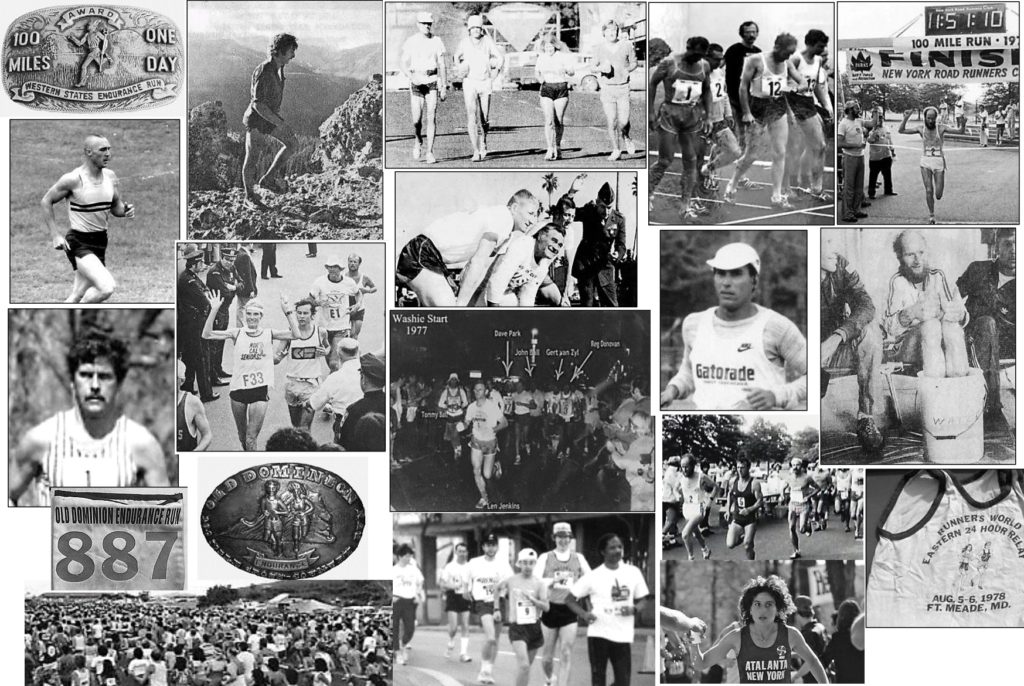 1977 was the year when the Western States 100 was established in the California Sierra mountains, with a rather unorganized inaugural race. It brought to light many lessons learned for both organizers and participants. In 1979, the Old Dominion 100 was created, patterning many of its mountain trail 100 practices after those that were being implemented at the Western States 100.
Other 100-mile races started to be held. 1978 saw the establishment of the Unisphere 100 at Flushing Meadows in New York City and the Fort Meade 100 started in Maryland. In England, the LDWA trail 100 challenges continued to be held each year since 1973. 100-mile walking races were held both in America and England.
In the late 1970s, Hawaii had the most runners per capita than any other state. Some called it the “running capital of the world.” Hawaii was also an early adopter of ultra distance races. In 1978, they introduced a 100-mile race, adding it to their already massive ultras of other distances.
The races would be nothing without the runners and their stories. This volume will include spotlights on the amazing 100-miler runners during the late 1970s, including Don Ritchie, Park Barner, Ted Corbitt, Marcy Schwam, Frank Bozanich, Don Choi, Andy Gonzales, Max Telford, Ruth Anderson, Ed Dodd, Tom Osler, Nick Marshall, Skip Swannack, Alan Price, Pat Smythe, Bill Lawder, Rich Innamorato, Ray Krolewicz, John Cappis, Mike Catlin, Gordy Ainsleigh, Cowman Shirk, Jim Shapiro, Jack Bristol, Lion Caldwell, Stu Mittleman, Frank MacMillan, Brent Weigner, Don Marvel, Paul Ryan, John Kenul, along with many unheralded, nearly forgotten runners, who courageously toed the start lines and finished the races.
This is the sixth book in the Ultrarunning History series. Others include: Running 100 Miles: Part 1: A History (1729-1960), Running 100 Miles: Part 2: A History (1961-1976), Strange Running Tales: When Ultrarunning was a Reality Show, Grand Canyon Rim to Rim History, Frank Hart: First Black Ultrarunning Star

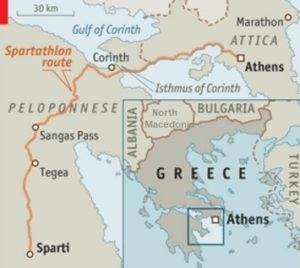 This is an encore episode. Spartathlon, an ultra of 246 km (153 miles), takes place each September in Greece, running from Athens to Sparta and with its 36-hour cutoff. It is one of the toughest ultramarathons to finish.
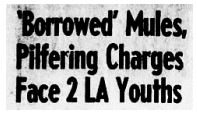 In 1950, two 15-year-old boys from Los Angeles discovered that hiking rim-to-rim was a lot harder than they thought. While resting down at Phantom Ranch, they ran up an $8 unpaid bill and then decided that there was no way that they were going to hike back up.
 Recently I went on the
  This part will cover additional stories found through deeper research, adding to the history shared in
 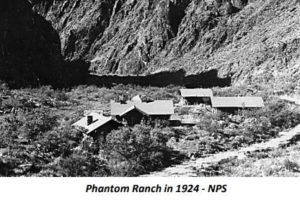 In 1906, David Dexter Rust (1874-1963) established a permanent camp near the confluence of Bright Angel Creek and the Colorado River that they name Rust Camp. They dug irrigation ditches and planted cottonwood trees by transplanting branches cut from trees found in nearby Phantom Creek. The camp was visited mostly by hunters going to and from the North Rim. Theodore Roosevelt (1858-1919) visited the camp in 1913 for a few hours and it was renamed to Roosevelt Camp. By 1917, the government revoked the permit for the camp, and it became deserted. As the Grand Canyon National Park was established in 1919, funds became available to develop the park and its trails. Phantom Ranch, a Grand Canyon jewel was ready to be built.
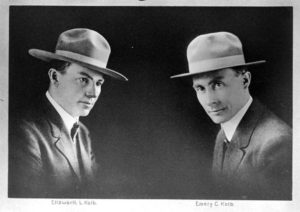 No Grand Canyon Rim to Rim History can be complete without mentioning the Kolb brothers, who maintained a photo gallery on the South Rim for decades. The two were among the very first to accomplish double crossings of the Canyon and did more exploring up Bright Angel Canyon and its side canyons than anyone of their era. They were early guides for those who wanted to cross and, knowing the canyon well, were involved in many rescues and searches for missing persons in the inner canyon. But they were best known for their daring antics to obtain spectacular photos in places others had never seen before and mastered the “selfie” 120 years ago.
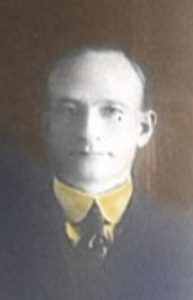 “Prof” Thomas Henry Cureton (1875-1957) of Williams, Arizona, was a significant Grand Canyon rim-to-rim contributor. Through his selfless service in the 1920s, he passed on the love of the inner Grand Canyon to a generation of youth who lived at the doorstep of the Canyon. Over several years, he guided about 50 youth across the Canyon and back, teaching them minimalist camping skills and how to love the Canyon while hiking on the developing inner Canyon trails. Fascinating and very detailed accounts of their Canyon adventures have been recently discovered and are preserved in this article. His pioneer rim-to-rim efforts inspired and launched hikes involving thousands of boy scouts to hike rim-to-rim in the decades to come.